A National Initiative

Contemporary Art Fair India

Kolkata, New Delhi (2007-2009)

Recognising the growing importance of art fairs as platforms for cultural exchange, artistic discovery, and collecting, Habiart Foundation alongwith Udbhav Arts Private Limited, launched Contemporary Art Fair India — a pioneering national initiative that brought together galleries, artists, collectors, institutions, and the wider public under one roof.

Held annually between 2007 and 2009 in New Delhi and Kolkata, the Fair quickly established itself as an important event in India's emerging contemporary art landscape. Conceived as a dynamic platform for dialogue between established masters and emerging talent, it provided galleries from across India and neighbouring countries with opportunities to showcase diverse artistic practices while fostering meaningful engagement with audiences.
Contemporary Art Fair India

A living cultural experience for artists and audiences

Beyond presenting paintings, sculpture, ceramics, glass, and mixed-media works, the Fair celebrated contemporary art as a living cultural experience through live demonstrations, performances, educational programmes, and interactive events. By exhibiting works across a broad spectrum of artistic styles and price points, it encouraged both seasoned collectors and first-time buyers to discover new talent, while creating valuable opportunities for artists and galleries to expand their reach.

The Fair also reflected the Foundation's enduring belief that art fairs are far more than commercial marketplaces. They are vital cultural forums that encourage education, dialogue, collaboration, and cultural exchange, strengthening connections between artists, institutions, collectors, and the public while nurturing a vibrant and inclusive contemporary art ecosystem.

Venues

2007

  • 16–18 February – Parish Hall, St. Paul's Cathedral, Kolkata
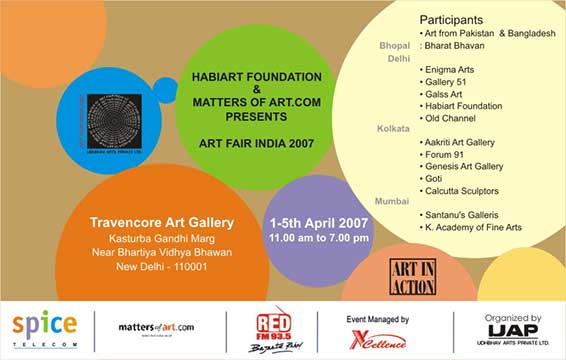
  • 31 March–5 April – Travancore Art Gallery, New Delhi

2008

  • 11–13 February – Ice Skating Rink, Kolkata
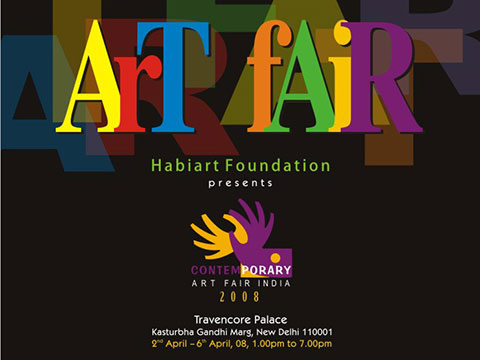
  • 1–5 April – Travancore Art Gallery, New Delhi

Over successive editions, the Fair established itself as a significant annual event within India's evolving contemporary art landscape.

Participating Galleries

Galleries, collectives and institutions

  • • Chitrakoot Art Gallery, Kolkata
  • • Garhi Artist Group, New Delhi
  • • Genesis Art Gallery, Kolkata
  • • Habiart Foundation, New Delhi
  • • Mirror Artist Group, New Delhi
  • • Naresh Kapuria Gallery, New Delhi
  • • Orchid Art Gallery, Mangalore
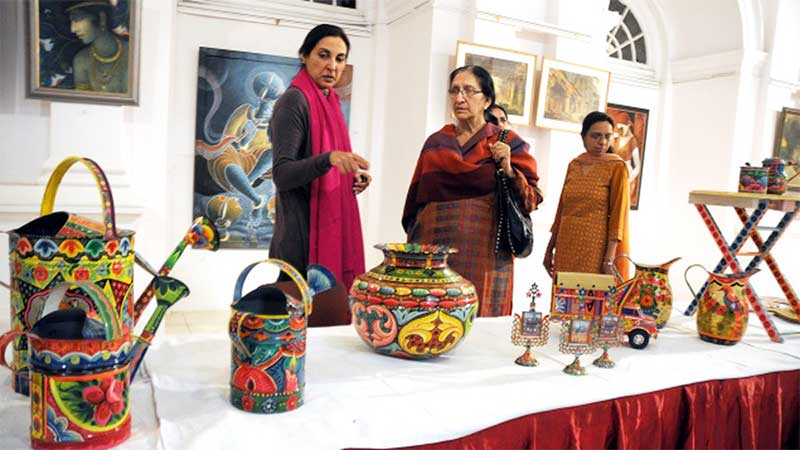
  • • Tribal Truck Art from Pakistan
  • • Vadehra Art Gallery Bookstore, New Delhi
  • • Vibgyor Art Gallery, Kolkata

Institutional participation also included artists from Baroda, Santiniketan, and Bhopal, creating an important platform that represented both established centres of contemporary art and emerging regional voices.

Taare Zameen Par

One of its most popular initiatives was Taare Zameen Par, an on-the-spot painting programme that invited children from diverse backgrounds to create artworks alongside professional artists. The event encouraged young creativity while providing participants with direct exposure to contemporary artistic practice. The Fair also featured live artistic presentations, performances by international artists, and interactive programmes that transformed the exhibition into a dynamic public cultural experience.

World Tea Party

An innovative feature of the Fair was the World Tea Party, first hosted by Habiart Foundation in New Delhi in 2008 in collaboration with Canadian artist and cultural activist Bryan Mulvihill. Inspired by the belief that tea has long served as a universal symbol of hospitality, dialogue, and peace, the event explored how tea traditions connect cultures across continents. Eastern civilisations, in particular, have cultivated rich artistic, architectural, and social rituals around the preparation and sharing of tea, making it a powerful metaphor for understanding and cultural exchange.

Bryan Mulvihill had previously organised World Tea Parties at major international venues including the National Gallery of Canada, the Mindscape Museum in Japan, Los Angeles, the Royal Academy during the London Biennale, and the Eiffel Tower in Paris. Recognised by UNESCO as an exemplary project of the World Decade for Cultural Development, the World Tea Party complemented the Fair’s vision by showing that art, culture and shared traditions remain powerful instruments for international understanding and peace.

International Cultural Exchange

Visitors were invited to experience teas and tea ceremonies from different parts of the world while engaging with visual arts, decorative arts, design, architecture, and performance traditions associated with tea cultures. The event demonstrated how sharing tea can foster dialogue across national, cultural, and artistic boundaries.