A Café Exposition

Reliving Van Gogh

Amsterdam, India International Center New Delhi (2015-2018)

"What colour is in a picture, enthusiasm is in life. Success is sometimes the outcome of a whole string of failure"
Vincent van Gogh.

Reliving Van Gogh exhibition artwork

Vincent van Gogh's artistic journey is often understood through distinct phases, each reflecting profound shifts in his emotional and creative life. His early years in the Netherlands were marked by a sombre palette and an empathetic portrayal of rural life, exemplified by masterpieces such as The Potato Eaters (1885) and Skull of a Skeleton with a Burning Cigarette (1886). His move to Paris (1886–1888) introduced him to Impressionism and a brighter, more experimental use of colour, resulting in a remarkable series of self-portraits. The final years in the South of France witnessed an extraordinary flowering of creativity, producing iconic works including The Yellow House (1888), Sunflowers (1889), and Almond Blossom (1890), painted to celebrate the birth of his nephew shortly before the artist's untimely death.

Van Gogh's practice was itself rooted in dialogue with the past. Throughout his career, he created more than thirty painted interpretations of works by artists he deeply admired, including Eugène Delacroix, Jean-François Millet, and Rembrandt van Rijn. Working from black-and-white prints and photographs, he described these paintings not as copies but as "interpretations" or "translations," likening his role to that of a musician performing a composition written by another. This philosophy of creative reinterpretation continues to inspire artists across the world.

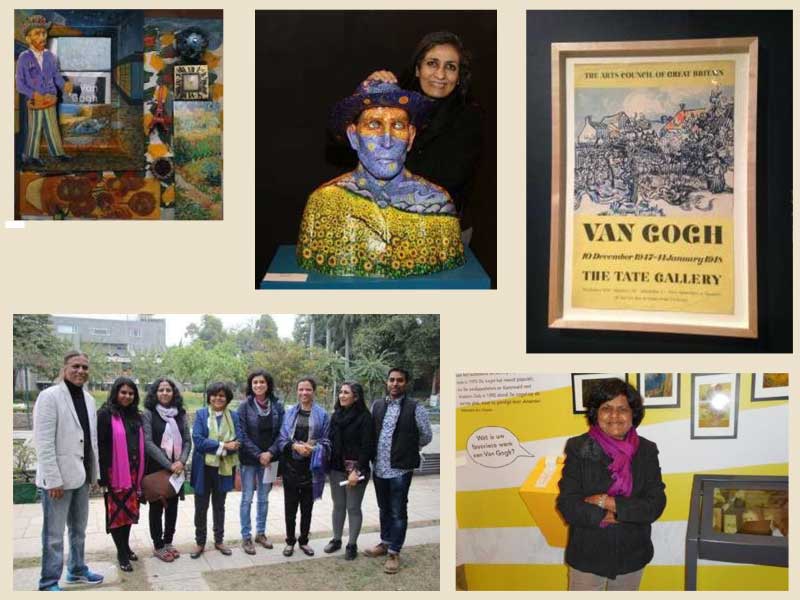
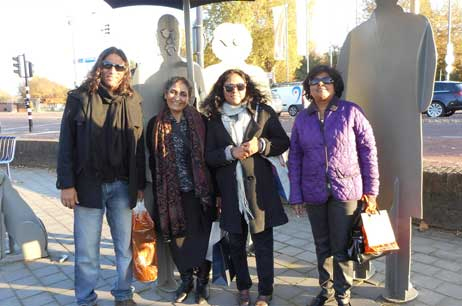
Inspired by Van Gogh's enduring legacy, Habiart Foundation invited three distinguished artists — Seema Kohli (India), Begum Tayeba Lipi (Bangladesh), and Mahbubur Rahman (Bangladesh) — along with curator Rekha Mody, to visit three institutions dedicated to the artist's life and work: the Van Gogh Museum, Amsterdam; the Kröller-Müller Museum, Otterlo; and the Het Noordbrabants Museum in the Netherlands in 2015.

Artworks Created

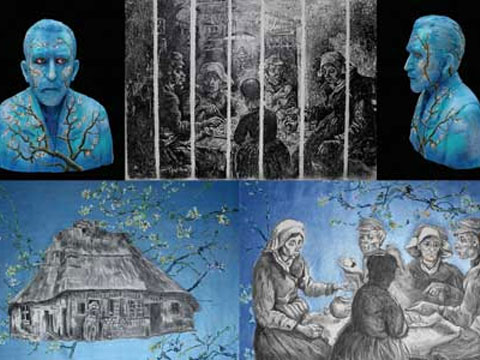
Immersed in Van Gogh's paintings, letters, and artistic environment, the artists embarked on a visual dialogue with his work. The visit became the catalyst for a new body of artworks inspired by masterpieces such as The Potato Eaters and Almond Blossom.

Rather than replicating Van Gogh's imagery, each artist responded through their own distinctive visual language, creating contemporary interpretations that honoured his vision while reflecting their individual cultural perspectives and artistic practices.

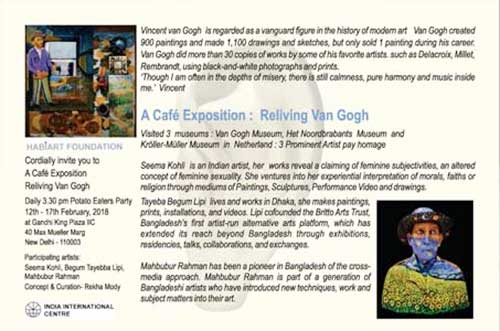
Presented by the Habiart Foundation in collaboration with the India International Centre, the resulting exhibition, Reliving Van Gogh: A Café Exposition, was held at the Gandhi–King Plaza, India International Centre, New Delhi, from 12–17 February 2018. Conceived as an immersive experience, the exhibition invited visitors to engage not only with Van Gogh's artistic legacy but also with the emotions, ideas, and profound humanism that continue to resonate through his work.

A distinctive feature of the exhibition was the daily Potato Eaters Party, held each afternoon at 4:00 p.m. Inspired by Van Gogh's celebrated painting, the interactive gathering encouraged audiences to experience the communal spirit embodied in The Potato Eaters through conversation, shared meals, and reflection. Extending the exhibition beyond the gallery walls, it transformed viewing into participation and reaffirmed art's capacity to foster dialogue, empathy, and human connection.

In the spirit of Van Gogh's own belief that artistic creation is an ongoing conversation across time, “Reliving Van Gogh” celebrated the enduring power of reinterpretation, demonstrating how great works of art continue to inspire new meanings across generations, cultures, and histories.