Uniting Knowledge Communities

One Globe

New Delhi (2012)

Held in February 2012 at the Imperial Hotel, New Delhi The One Globe: Uniting Knowledge Communities Conference was a landmark gathering dedicated to exploring the foundations of a 21st-century knowledge economy in India and South Asia.
One Globe 2012

A visual buttress to the bridge that Aristotle envisioned between inquiry, understanding, and wisdom

Produced by BrainGain Magazine's editorial and conference team, the conference brought together global thought leaders, educators, policymakers, technologists, and innovators to examine the intersections of education, technology, skills development, entrepreneurship, and innovation. At its heart was a shared commitment to addressing one of the defining challenges of our time: building an inclusive and sustainable knowledge-based society across South Asia.

As the Art & Culture Partner for the conference, Habiart Foundation presented a curated exhibition of contemporary artworks that served as quiet yet compelling companions to the conversations unfolding within the conference halls. The exhibition positioned art as a benign beacon in humanity's quest for knowledge — a visual buttress to the bridge that Aristotle envisioned between inquiry, understanding, and wisdom.

Rather than offering direct illustrations of the conference themes, the artworks invited reflection. They illuminated perspectives beyond our own while recalling aspirations, ideals, and shared ambitions that often become obscured as life's choices narrow with age and experience. The faces and figures inhabiting these works echoed the very concerns of the knowledge communities being reshaped inside the conference: communication, resilience, aspiration, vulnerability, freedom, and hope.

Laxman Aelay
Laxman Aelay

Artist

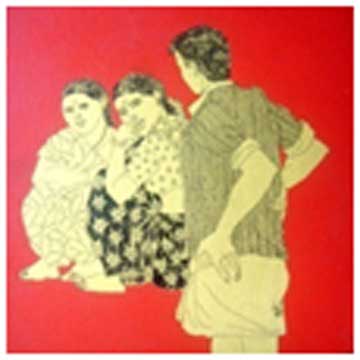
Laxman Aelay’s art captured a moment of quiet coyness that became an epiphany on the power of communication to bridge divides.

Diptish Ghosh
Diptish Ghosh

Artist

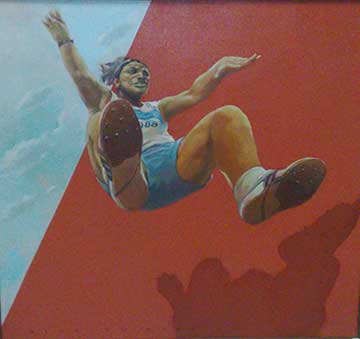
Diptish Ghosh’s work presented a moment of triumph that simultaneously revealed the fragility of achievement - Limbs outstretched against an expansive blue sky, the figure appears suspended between ascent and inevitable descent into a shadowed red—a poignant reminder of the delicate balance between success and uncertainty.

Mousumi Biswas
Mousumi Biswas

Artist

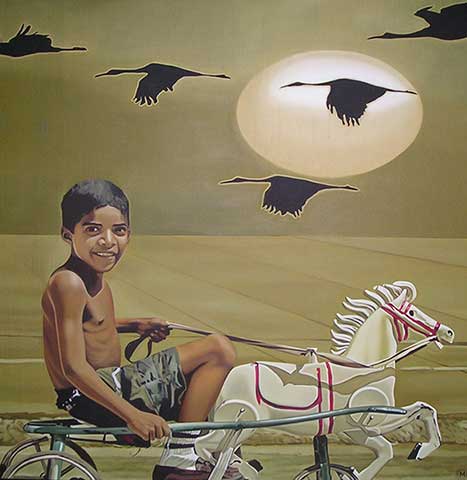
In the dreamlike landscapes of Mousumi Biswas, a desert became a place of aspiration, where hope endured through the irrepressible smile of a young boy.

Ghulam Rasul
Ghulam Rasul

Artist

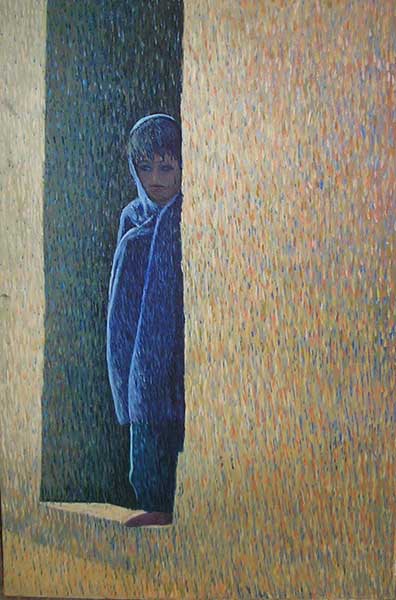
Equally affecting was the artwork titled “The Child “, by Ghulam Rasul, a deeply moving meditation on exclusion from education--brilliant pointillist strokes cloaked the child in luminous electric blue, conveying vitality and innocence, while the stark beige landscape surrounding him evoked isolation and deprivation. The work transcended social commentary to become a profound reflection on dignity, inequality, and lost opportunity.

Swaroop Basak
Swaroop Basak

Artist

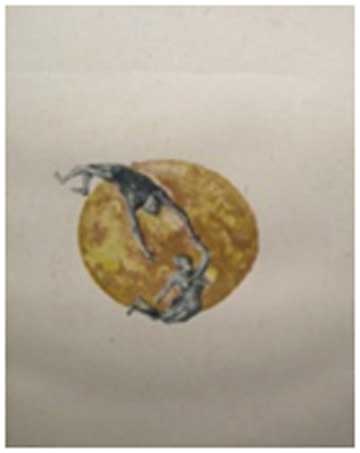
In a striking inversion of conventional colour symbolism, artist Swaroop Basak employed muted earth tones and restrained greys to evoke exuberance and liberation. His elongated figures, spanning the globe, seemed to defy gravity itself—released from physical and emotional constraints, suggesting a world in which human potential is no longer bound by circumstance.

Saptarshi Naskar
Saptarshi Naskar

Artist

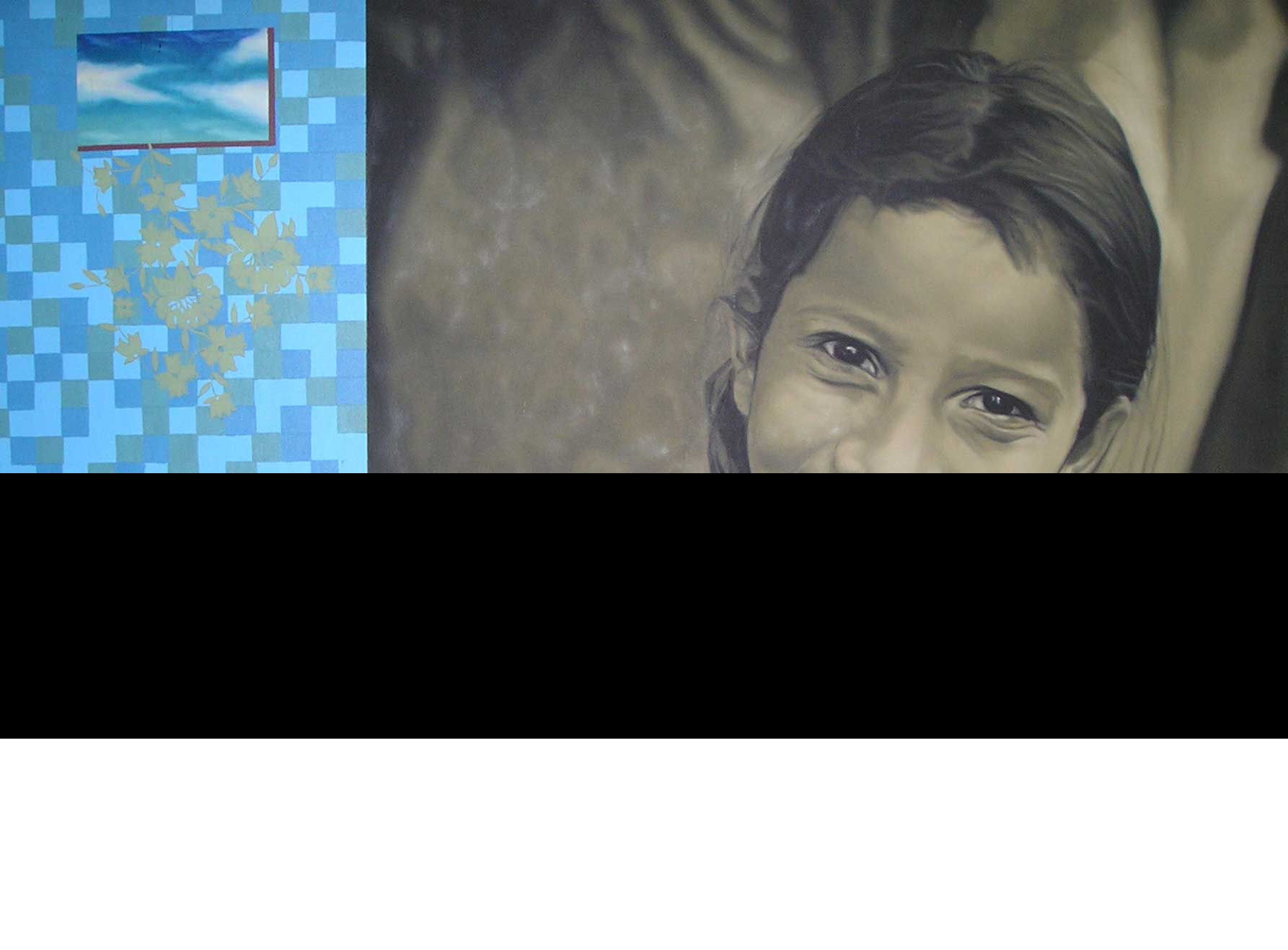
Completing this visual journey, artist Saptarshi Naskar reminded us of the ultimate purpose behind every pursuit of knowledge: the transformative power of hope. His portrait of a young girl, her face already marked by burdens beyond her years, culminated in a smile that spoke not only of resilience but of possibility.

Ajay De
Ajay De

Artist

Ajay De is an acclaimed contemporary Indian artist born in 1967 in Kolkata, best known for his mastery of charcoal and stark black-and-white urban and nature studies.

Together, all these artworks underscored the conference's central belief: that the pursuit of knowledge is not merely an intellectual endeavour, but a profoundly human one. Through art, the exhibition affirmed that empathy, imagination, and shared experience remain essential to building the inclusive knowledge communities of the future.