Waiting for Ananda is a multidisciplinary project that celebrated and documented the
extraordinary yet often overlooked contributions of women to the spread and practice of the Buddha
Dharma.
Through a compelling photography exhibition and a documentary film, the project brought into focus the lives of women who have shaped contemporary Buddhism—dedicated practitioners, bhikkhunis, nuns, yoginis, laywomen, patrons, scholars, and social leaders whose work had sustained and enriched the Buddhist tradition across the world.
The project sought to create one of the first comprehensive visual archives dedicated to women in Buddhism,
highlighting their spiritual journeys, leadership, and service to society.
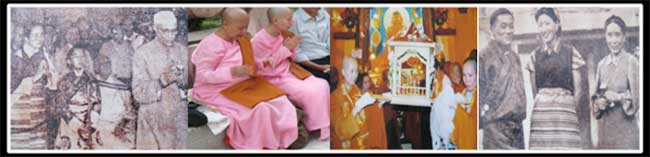
The collection brought together a rare combination of archival photographs and contemporary images from India, Tibet, China, Taiwan, Bhutan, Singapore, Thailand, Canada, and the United States, creating a unique international photographic archive on the role of women in Buddhism.
Together, these images revealed the diversity of women's experiences within the Buddhist world—as spiritual seekers, teachers, community leaders, custodians of tradition, and agents of social change. Through photography, film, archival material, and sacred texts, the project aimed to restore visibility to the women whose lives have quietly shaped the Buddhist world, creating a lasting visual testament to their enduring legacy.
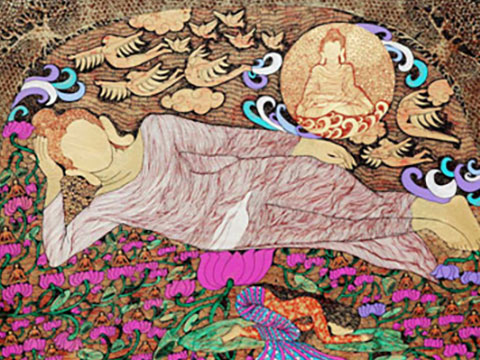
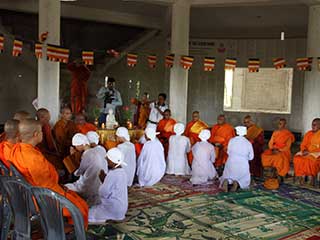
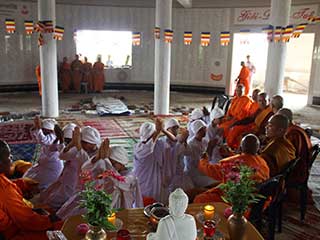
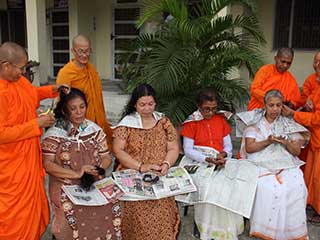
Waiting for Ananda is a documentary film created by renowned artist Seema Kohli, whose artistic practice is deeply rooted in spirituality and the exploration of consciousness. Conceptualised by Rekha Mody and supported by the Habiart Foundation, Waiting for Ananda was filmed in 2013 against the backdrop of the historic Buddhist ordination ceremony held in Vaishali, Bihar, in July 2012. The documentary was created by Rekha Mody, Bryan Mulvihill, and artist-filmmaker Seema Kohli, who travelled to Vaishali to document the ceremony and capture the voices, experiences, and spiritual journeys of the women participating in this landmark event.
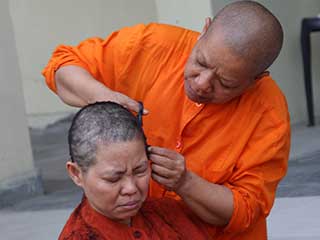
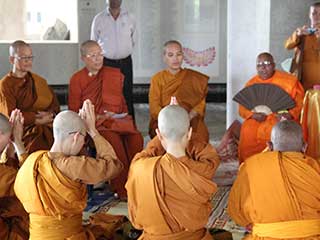
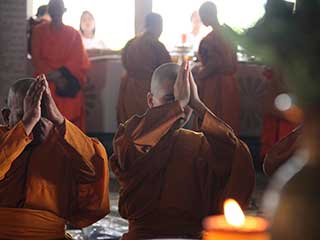
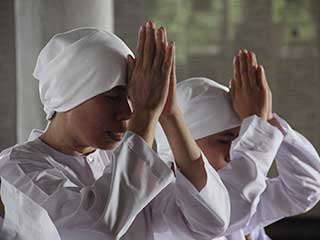
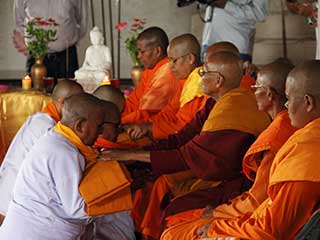
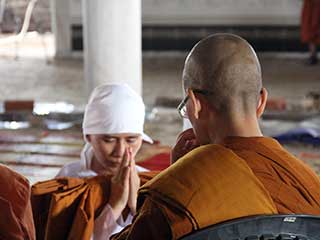
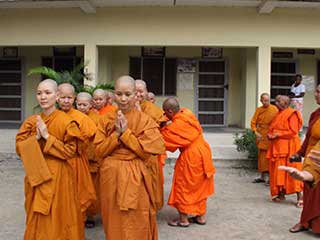
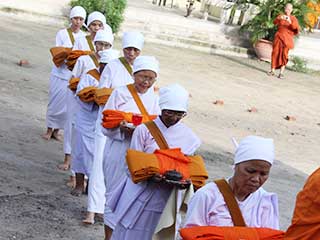
The film records one of the most significant gatherings of Buddhist nuns in contemporary India, documenting the ordination of bhikkhunis and samaneris conducted by senior nuns representing six countries—India, Tibet, Sri Lanka, Thailand, Vietnam, and Malaysia. Through interviews, ceremonial rituals, and intimate observations, Waiting for Ananda offers a powerful account of women's spiritual commitment, resilience, and leadership, preserving an important moment in the contemporary revival of the Bhikkhuni ordination tradition in India. In doing so, the documentary celebrates the enduring contribution of women to Buddhism while illuminating a chapter of Buddhist history that continues to inspire dialogue on equality, compassion, and spiritual empowerment.
The title Waiting for Ananda draws inspiration from one of the most important episodes in Buddhist
history.
Following the death of King Suddhodana, Mahapajapati Gotami, the Buddha's foster mother,
travelled on foot to Vaishali accompanied by 500 women seeking ordination into the monastic order.
Despite repeated requests, the Buddha initially declined to establish an order of nuns.
It was Ananda, one of the Buddha's closest disciples, who compassionately argued on behalf of these women. He questioned whether women were equally capable of attaining enlightenment and Nirvana. Acknowledging that they were, the Buddha finally consented, and Mahapajapati Gotami and her companions became the first Buddhist nuns, establishing the Bhikkhuni Sangha. During the reign of Emperor Ashoka, the Bhikkhuni tradition continued to flourish. Sanghamitta, Ashoka's daughter, travelled to Anuradhapura in Sri Lanka with eleven fellow nuns and a sapling from the sacred Bodhi Tree at Bodh Gaya, establishing the Bhikkhuni Sangha in Sri Lanka. Historical records indicate that this monastic lineage prospered until around the eleventh century before gradually disappearing from much of South Asia. Although women have continued to make profound contributions to Buddhism as lay practitioners, teachers, scholars, and social workers, the formal Bhikkhuni ordination tradition has remained absent in many parts of India. This presents a striking paradox in the land where the Buddha first affirmed women's capacity for spiritual liberation.
The ordination documented in Waiting for Ananda took place at the Mahapajapati Nunnery within the Vietnam Temple complex in Vaishali, Bihar, built in memory of Mahapajapati Gotami. The ceremony was inaugurated by Venerable Professor Dr. Bhikkhu Satyapal, Head of the Department of Buddhist Studies, University of Delhi, on 28 July 2012.
Bringing together a large international gathering of bhikkhunis and nuns, the event marked one of the first major Buddhist ordination ceremonies of its kind in Vaishali since India's Independence. It represented not only a revival of an ancient tradition but also an important milestone in the ongoing conversation about women's place within contemporary Buddhism.
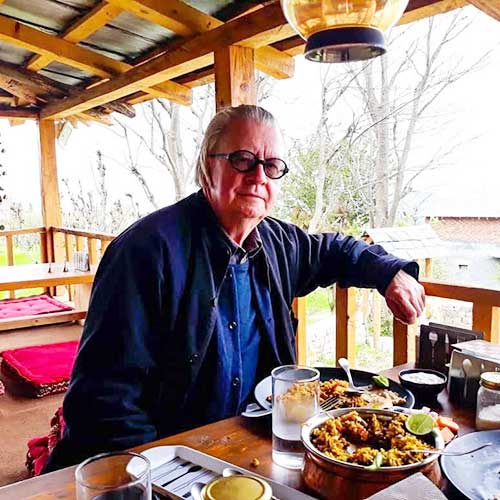
Bryan Mulvihill is a contemporary Buddhist artist, researcher, and scholar
whose work explores the intersections of early Indian and Trans-Himalayan Buddhist art,
philosophy, and contemporary visual culture. A graduate of the
University of British Columbia, Canada
, he has devoted decades to the study of Buddhist history and
aesthetics.
Mulvihill studied under C. Y. Radha and Chime Rinpoche, renowned scholar and former
Keeper of the Tibetan and Himalayan collections at the British Museum, London. His research has
taken him across the Buddhist regions of North India, Nepal, Bhutan, and the Himalayan belt,
where he has lived and travelled extensively, engaging closely with monastic communities and
documenting Buddhist traditions.
His artistic practice integrates Buddhist philosophy with contemporary artistic expression,
creating works that explore themes of contemplation, impermanence, and cultural memory. His work
has been exhibited internationally, contributing to dialogues on spirituality and contemporary
art.
Bryan Mulvihill is also the founder and Artistic Director of the World Tea Party Society,
an international initiative that promotes intercultural understanding through the ancient
traditions and ceremonial practices of tea.
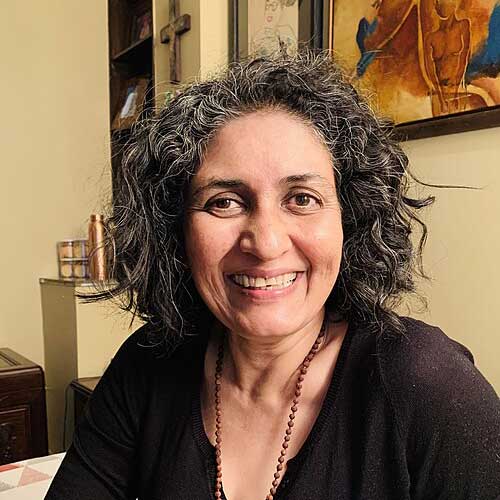
Seema Kohli is one of India's leading contemporary artists, whose
multidisciplinary practice encompasses painting, sculpture, installation, performance, film, and
poetry. Her work explores the feminine as a powerful creative force, celebrating the
interconnectedness of mythology, spirituality, sexuality, memory, and consciousness.
Central to Kohli's artistic language is the exploration of feminine subjectivity. Her works
celebrate the physical, intellectual, emotional, and spiritual dimensions of womanhood,
presenting the female form as a site of beauty, sensuality, wisdom, and transformation. Drawing
upon Indian mythology and philosophical traditions, she creates richly layered visual narratives
that invite contemplation and introspection.
A significant body of her recent work revolves around the concept of Hiranyagarbha—the "Golden
Womb" or cosmic source of creation—derived from a hymn in the Yajur Veda. This ongoing series
reflects the quiet yet perpetual process of creation, presenting the feminine principle as the
origin of life, consciousness, and renewal. Rather than being religious in intent, these works
are deeply spiritual, functioning as meditative explorations of the eternal self.
Through intricate drawings, luminous colour, and layered compositions, Kohli's work symbolises
the continuous evolution and regeneration of thought and consciousness. Whether working on
intimate drawings or monumental installations, she approaches each work as an offering—a gesture
of devotion, meditation, and self-discovery.
Over a career spanning more than two decades, Seema Kohli has consistently expanded her visual
vocabulary across multiple mediums while remaining committed to an enduring exploration of
identity, creation, and the human spirit. In recognition of her outstanding contribution to
contemporary Indian art, she has been honoured by the Lalit Kala Akademi for her achievements as
a woman artist.
Seema Kohli lives and works from her studio in New Delhi.